The Safety Commitment Anthropic Is Taking to Court
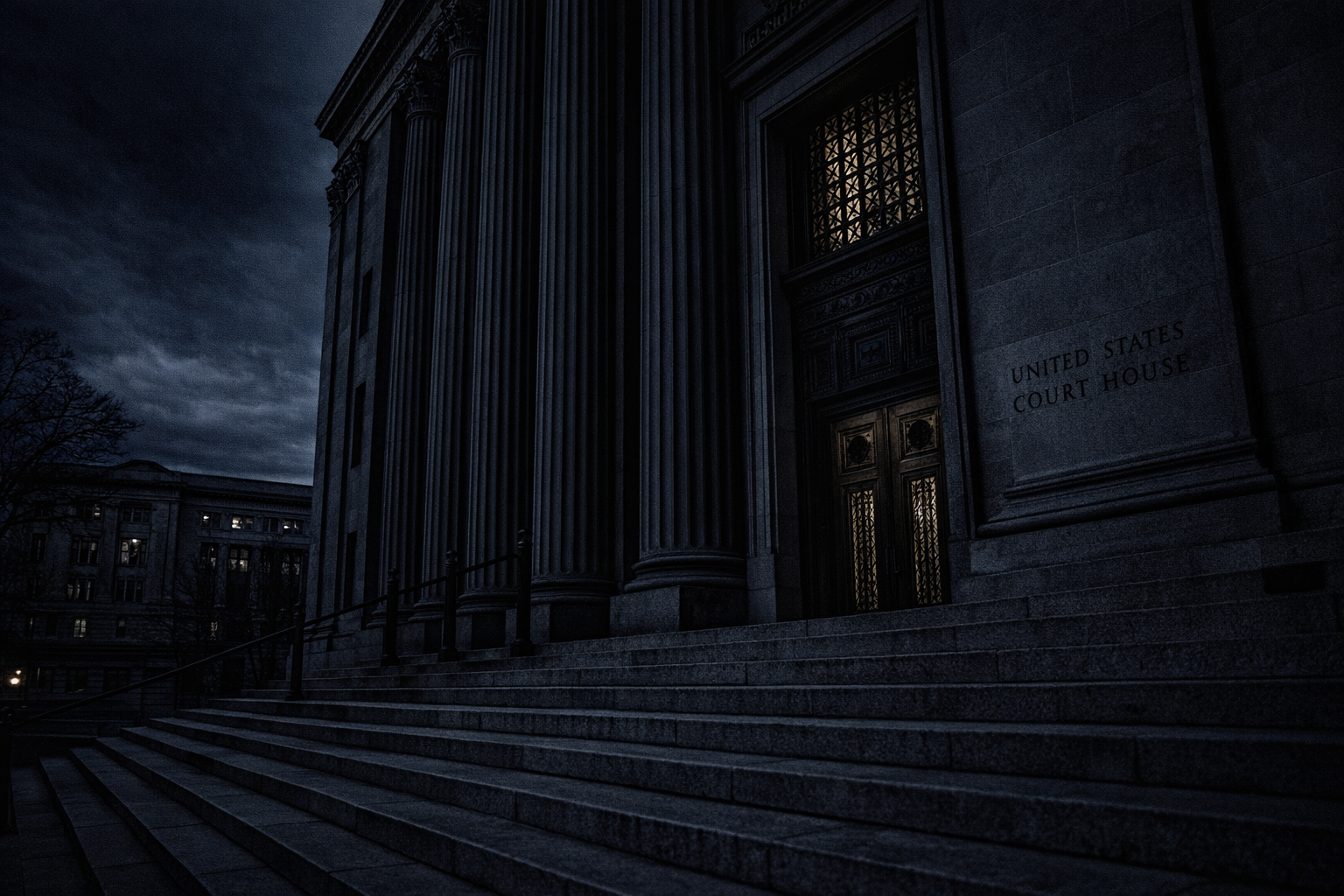
The Safety Commitment Anthropic Is Taking to Court
On April 8th, Anthropic filed a petition in the D.C. Circuit Court of Appeals against the United States Department of War. Tech press missed it. That’s a mistake.
The case — Anthropic PBC v. United States Department of War, docket 26-1049 — isn’t about a patent dispute or a government contract gone sideways. It’s about something considerably more interesting: whether an AI company’s safety commitments have any legal force, and whether the government can compel a company to change how its AI behaves in the field. Anthropic’s answer, reportedly, is that it couldn’t comply with such an order even if it wanted to. The architecture won’t allow it.
What Happened
The Department of War — the renamed successor to the Department of Defense — gave Anthropic a “sabotage-risk designation” under some national security classification framework. The details of the designation remain sealed, but the broad structure is clear enough from the docket: a federal agency decided that Anthropic’s AI posed a potential national security risk of the sabotage variety, and attached formal regulatory consequences to that classification.
Anthropic is fighting it.
The specific argument, as reflected in reporting around the filing, is that Anthropic’s safety architecture makes government-ordered behavioral modification of deployed Claude models impossible — not merely unlikely, not merely against policy, but technically infeasible. The line being attributed to their legal position: we couldn’t alter a deployed Claude even if ordered to.
That’s not a defense of inaction. It’s a constitutional AI claim in a federal courtroom.
Why the Architecture Argument Is the Interesting One
Most AI safety debates happen at the policy level: guidelines, acceptable use policies, model cards, red lines that companies say they won’t cross. The implicit assumption is that any of these could be changed with enough pressure — political, regulatory, financial, or otherwise.
Anthropic has spent years arguing that this isn’t quite right for their models. Constitutional AI, the technique they developed and published in 2022, isn’t just a policy overlay. It’s a training methodology that builds principles into the model’s weights themselves. The idea is that the alignment is structural, not cosmetic — more like a building’s foundation than its paint color.
The Pentagon filing is the first time this architectural claim has been tested against actual government compulsion. Anthropic isn’t saying “we won’t change it.” They’re saying “we can’t change a deployed model retroactively, and the way it was trained means the properties you’re objecting to are not separable from its function.”
Whether that argument holds up legally is a different question. Courts are not well-equipped to adjudicate claims about model weight irreversibility. But the fact that Anthropic made the argument at all — in a federal appeals court, against a government agency, rather than quietly accommodating the designation — tells you something about how seriously they take the commitment.
The IPO Problem Hidden in the Docket
Here’s the part the tech press definitely missed: Anthropic has been in pre-IPO positioning for months. S-1 prep is incompatible with active federal litigation in which you’re telling the government you cannot comply with its security requirements. Full stop.
The D.C. Circuit doesn’t move fast. An appeal of a national security designation involves classification reviews, sealed proceedings, and procedural timelines that routinely stretch past a year. Whatever IPO window Anthropic thought it was approaching in 2025 has almost certainly closed until this resolves.
The irony is that the thing delaying the IPO is the thing that makes Anthropic credible as a safety company. If they’d quietly accepted the designation, modified whatever the Pentagon wanted modified, and moved on — the S-1 would probably be filed by now. Instead, they’re in court arguing that their safety architecture is genuinely non-negotiable. That’s either principled or operationally reckless, depending on where you sit.
Where AI Governance Actually Happens
The Senate has held dozens of AI hearings. The EU has implemented an AI Act. The White House has issued executive orders. None of this has meaningfully constrained what AI companies build or how they build it.
Federal courts are a different story. Anthropic v. Department of War is a live case in which a federal judge will eventually have to answer concrete questions: What constitutes a legitimate national security designation for an AI company? Can a government compel retroactive behavioral modification of deployed AI? What obligations does an AI company have when compliance is architecturally infeasible?
These are not hypothetical questions for an ethics workshop. They’re questions with docket numbers.
I found this case while building a research tool that monitors federal courts for AI-related litigation — the kind of infrastructure you end up building when you’re trying to make sense of prediction markets that trade on AI company outcomes. The Anthropic docket surfaced on the first run. It wasn’t hard to find. It just required looking.
The fact that it took a custom scraper to surface this — rather than the obvious tech coverage it merits — is its own commentary on where the AI discourse is currently focused, and where it should be.
Not-nick-jordan.com covers things worth paying attention to, told directly.