Bachelor Party Does Not Equal Marketing Event
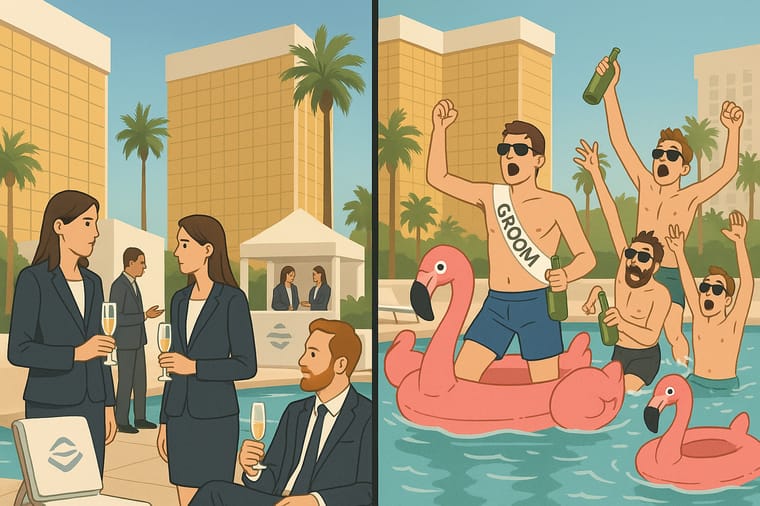
Someone spent $1,600 on a pool cabana at Adobe Summit — private space, food, drinks, branded towels — instead of a six-figure booth. It worked. The post went viral, the comments are full of people saying they should have been there.
A colleague saw it and asked: should we do something like this?
My response, unhelpfully: I once attended a bachelor party with a Vegas pool cabana and a $25,000 tab. Nobody closed any deals.
His response, correctly: that is why a bachelor party does not equal a marketing event.
The insight is sharper than it sounds. The cabana story works not because it was cheap or clever or poolside. It worked because it was designed for a specific kind of interaction — meetings, conversations, the slow work of relationship-building — and everything about the setup reinforced that intent. The branded pillows are not frivolous; they signal that someone thought about the experience.
The bachelor party had the same venue, similar spend, and produced zero business outcomes. Not because the people were different or the budget was wrong. Because the format was wrong. The social contract of a bachelor party is not the social contract of a client meeting. You cannot override that with champagne.
This is the thing that gets missed in the disrupt-the-trade-show conversation. People see the $1,600 number and think: low budget, high creativity. But that is not the variable. The variable is intentional design. You could spend $50,000 on a cabana and blow it entirely if you have not thought about what you are actually trying to create.
The booth companies are not failing because they are expensive. They are failing because they are designed for the wrong outcome — visibility, not conversation. You walk by, you take a tote bag, you leave. The cabana forces a different behavior: you sit down, you stay for a drink, you talk to someone.
Format defines what is possible. Budget is almost beside the point.