Miso Horny
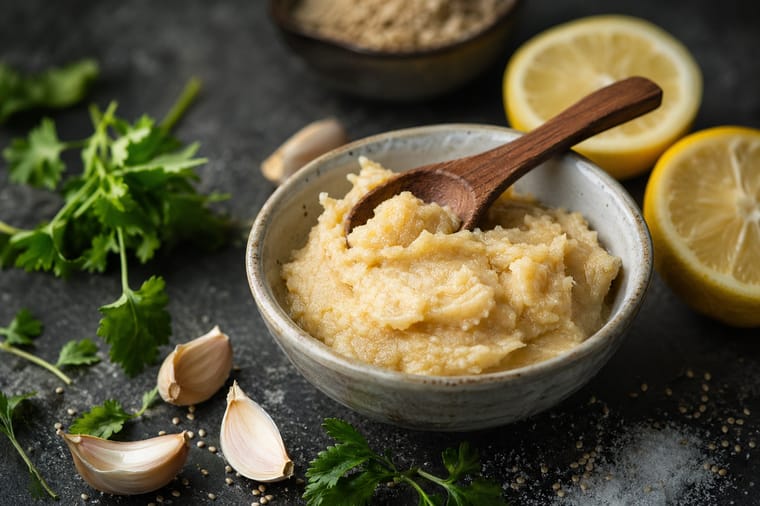
I have been putting white miso in things that have no business containing miso, and every single one of them has been better for it.
Not in a “fusion” way. Not in a way that announces itself. That’s the whole point. White miso disappears into food. You don’t taste miso — you taste a deeper version of whatever you were already making.
What It Actually Does
Miso is fermented soybean paste. White miso (shiro miso) is the mildest variety — fermented for a shorter period, sweeter, less salty than the red stuff. It’s got umami: glutamates and nucleotides that activate the savory receptors on your tongue in the same way parmesan does, or anchovies, or a long-simmered stock.
But unlike those things, white miso has almost no flavor identity of its own. It doesn’t make things taste like miso. It makes things taste like themselves, louder.
This is what people mean when they say something has “depth.” It’s not complexity for its own sake — it’s the sensation that the flavor you’re tasting has weight, that it’s coming from somewhere. Miso adds that without showing up.
Where I’ve Been Using It
In the farro. I grilled a NY strip last week and made a warm farro salad to go with it. The farro gets finished with a tablespoon of white miso and a knob of butter while it’s still hot. The miso doesn’t make it taste Japanese. It makes it taste like farro that was cooked by someone who knows what they’re doing.
In the herb sauce. Same meal: a bright, loose herb sauce over the steak with parsley, chives, tarragon, lemon, and miso whisked in as the backbone. It’s the thing that keeps the sauce from being just acidic and green. The miso rounds it out.
In the ramen broth. This is where I started. The NYC BEC Ramen I made earlier this spring uses white miso in the dashi base alongside bacon fat and Velveeta — a carbonara-style enrichment that should be chaotic and somehow isn’t. The miso is what makes it coherent.
In the gnocchi butter. Skillet gnocchi, pan-seared until crispy, finished with a miso butter that’s just butter and white miso whisked together. The miso caramelizes slightly in the hot pan and does something very good to the gnocchi exterior.
In the cookies. Brown butter chocolate chip cookies with a tablespoon of white miso in the dough. I was skeptical. I was wrong. The cookies taste like the best version of themselves — more butterscotchy, deeper, with an edge that keeps them from being cloying.
The Compound Butter Move
The most useful thing I’ve done with it is make miso compound butter. Softened butter, white miso, a little fresh thyme, and some lemon zest, rolled into a log and kept in the freezer. A slice goes on anything: grilled fish, roasted carrots, a bowl of farro, the top of a steak as it rests.
It’s the pantry version of having a mother sauce on hand. It makes everything taste finished.
How Much to Use
White miso is already salty. Start with less than you think — a tablespoon in a batch of cookies, a tablespoon in a pound of farro, two tablespoons in a sauce for two. Taste as you go and pull back on any other salt source accordingly.
Red miso is sharper and saltier and more assertive — use it in places where you want it to be felt, not hidden. For the disappearing act, white miso is the move.
The Thing About Fermented Ingredients
Miso, fish sauce, Worcestershire, anchovies, parmesan — these are all doing essentially the same thing. They’re concentrated, fermented sources of glutamate. They make food taste savory and complete in a way that regular salt doesn’t.
The reason miso has been useful for me right now is that it’s mild enough to work across a wider range of applications than the others. Fish sauce announces itself. Anchovies can be polarizing. White miso just quietly makes everything better and lets everything else take credit.
That’s a useful ingredient to have around.