The Constraint Engine: Why Every Strategy Game Is Just Civilization in a Different Costume
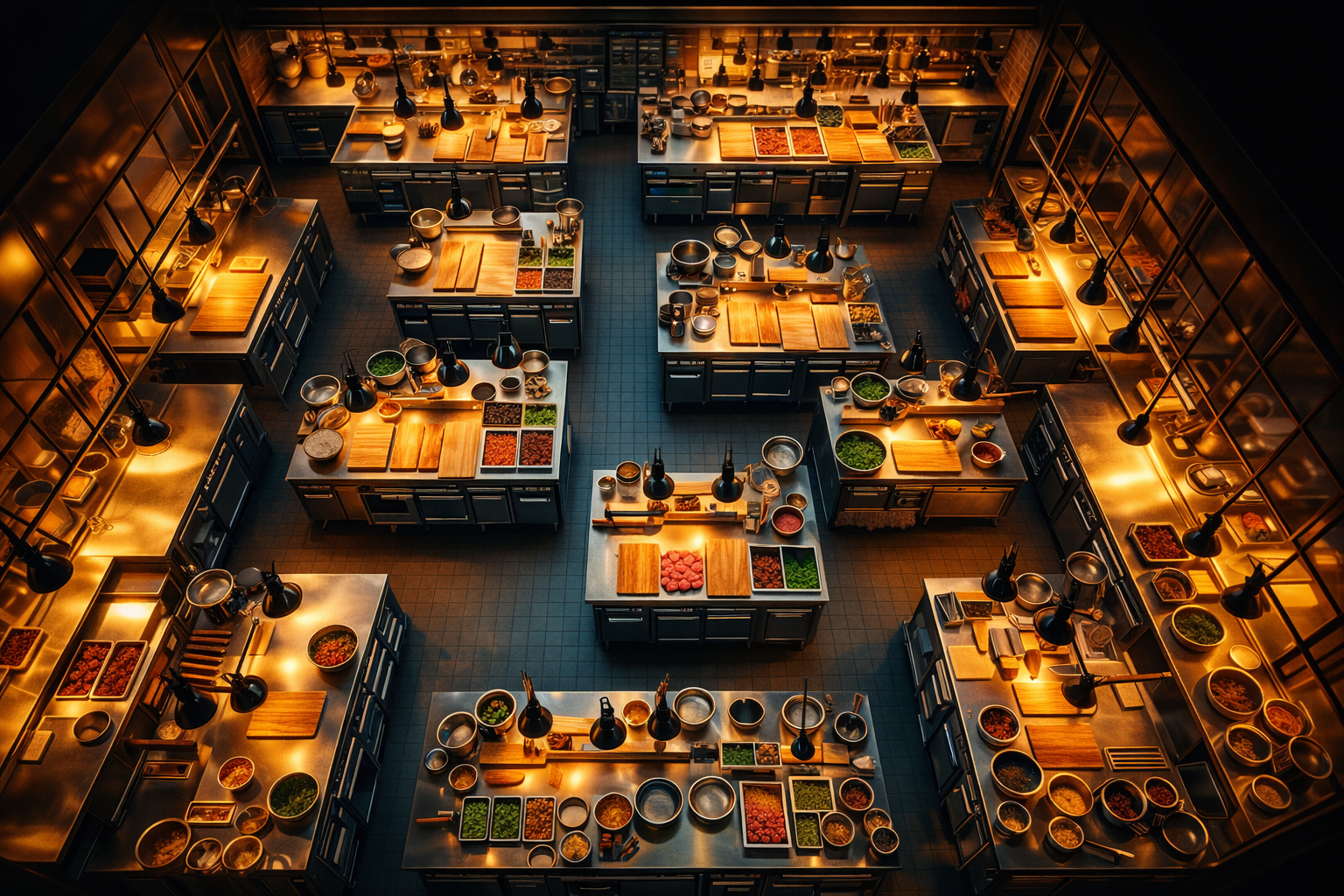
The first question anyone asks when they want to build a game is “what game should I build?” That’s the wrong question. The right question is “what mechanics am I actually interested in?”
Civilization is the canonical example of a strategy game, and a lot of developers start there. You’ve got resources, expansion, technology trees, conflict, diplomacy. It’s compelling. But most people who set out to build a “Civ knockoff” are really saying: “I want that feeling” — and what they actually mean is they want the pleasure of watching systems interact, of constrained choices compounding into unexpected outcomes over time.
Here’s the thing: those mechanics aren’t about civilization at all. They’re portable.
The Mechanics Are the Point
Civ’s core loop is: gather resources, make decisions, watch consequences unfold. Every turn you’re managing competing constraints. You can’t do everything. Tradeoffs accumulate. The map becomes a record of your choices.
That loop works for a restaurant. It works for a shipping company. It works for a law firm, a news network, a hospital, a baseball franchise. The theme is almost irrelevant — it’s the constraint architecture underneath that generates the fun.
When someone asks “how hard is it to build a Civ knockoff,” they’re usually underestimating the scope of the question. Civilization the game has thirty years of iteration, a massive technology tree, and diplomacy systems so complex they’re practically their own game. Building that is a multi-year project.
But building the mechanics that make Civ interesting? That’s achievable in a weekend prototype.
A Restaurant Is Just Civilization Without Diplomacy
Consider a restaurant management game. You have:
- Resources: ingredients, cash, staff hours, kitchen capacity, customer patience
- Research: new dishes unlock when you’ve cooked enough of their components
- Expansion: you start with four tables, grow to a full dining room, maybe a second location
- Conflict: not war, but competition — the French place down the street just launched brunch
Every mechanic that makes Civ interesting has an analog. The technology tree becomes a recipe tree. The worker units become your line cooks and front-of-house staff. The fog of war becomes an unknown customer mix — you don’t know if tonight’s going to be families or a party of twelve until the reservation book fills up.
The constraint dynamics are identical. You’re making decisions under uncertainty with incomplete information, watching them compound over time.
Why the Theme Matters (Even If the Mechanics Don’t)
This sounds like I’m arguing the theme is irrelevant. I’m not. The theme determines your emotional relationship to the decisions.
In Civ, when your city falls, it feels catastrophic — there’s something viscerally wrong about watching a civilization you built get destroyed. That emotional register drives engagement in a way that’s hard to manufacture.
A restaurant game has different emotional affordances. A ruined dinner service feels frustrating, even embarrassing — you can imagine the human moment. Customers disappointed. Kitchen stressed. Margins evaporating. That’s a different flavor of engagement, not a lesser one. Arguably more relatable to most people than losing a medieval city-state to the Mongols.
The art of game design at this level is picking a theme that generates the emotional engagement you want, then asking whether your chosen mechanics can carry that weight.
A restaurant theme pulls this off because everyone has been to a restaurant. The systems are legible from lived experience. You don’t have to explain resource scarcity — everyone understands what happens when you run out of tomatoes mid-service.
What You Actually Need to Build
If you’re a developer approaching this as a TypeScript project on a weekend, the honest architecture looks like:
Turn management: a simple tick system where each turn represents a meal service. You process inputs (reservations, staff availability, ingredient inventory) and compute outputs (revenue, reputation, staff morale).
A constraint model: what are your limited resources? Table count, kitchen capacity, ingredient freshness windows, staff skill levels. These interact. More tables means more revenue potential but also more stress on your kitchen.
An event system: random events (a food critic shows up, you get an unexpected reservation for twenty, the fish delivery is late) that require in-the-moment decisions. This is where the game lives — not in the optimization loop, but in the disruption of it.
A progression layer: what unlocks over time? New dishes, new equipment, new staff roles, new locations. This is your tech tree. It doesn’t need to be elaborate to be satisfying.
The entire system is maybe 2,000 lines of TypeScript if you write it clean. The complexity is design complexity — figuring out how the constraints interact in interesting ways — not implementation complexity.
The Broader Pattern
Every compelling strategy game is really just a constraint simulation wearing a costume. The costume determines who will love it. The constraint architecture determines whether anyone will still be playing it in six months.
The interesting design question is never “what game should I build?” It’s “what set of constraints generates interesting decisions?” Once you know that, the theme is almost a UX decision — it’s about legibility and emotional resonance, not core mechanics.
Civilization figured out a constraint architecture that generates decisions worth making. It also happened to use a theme that connected those decisions to something people cared about: the sweep of history, the anxiety of progress, the seductiveness of expansion.
A restaurant game can do the same thing at a smaller scale. The kitchen is its own kind of civilization — precarious, ordered, run by people making constant tradeoffs under pressure. The mechanics translate because the underlying human situation is the same.
Start there. Build the constraint engine. Then dress it up.