The Drill Bit Taped to the Box
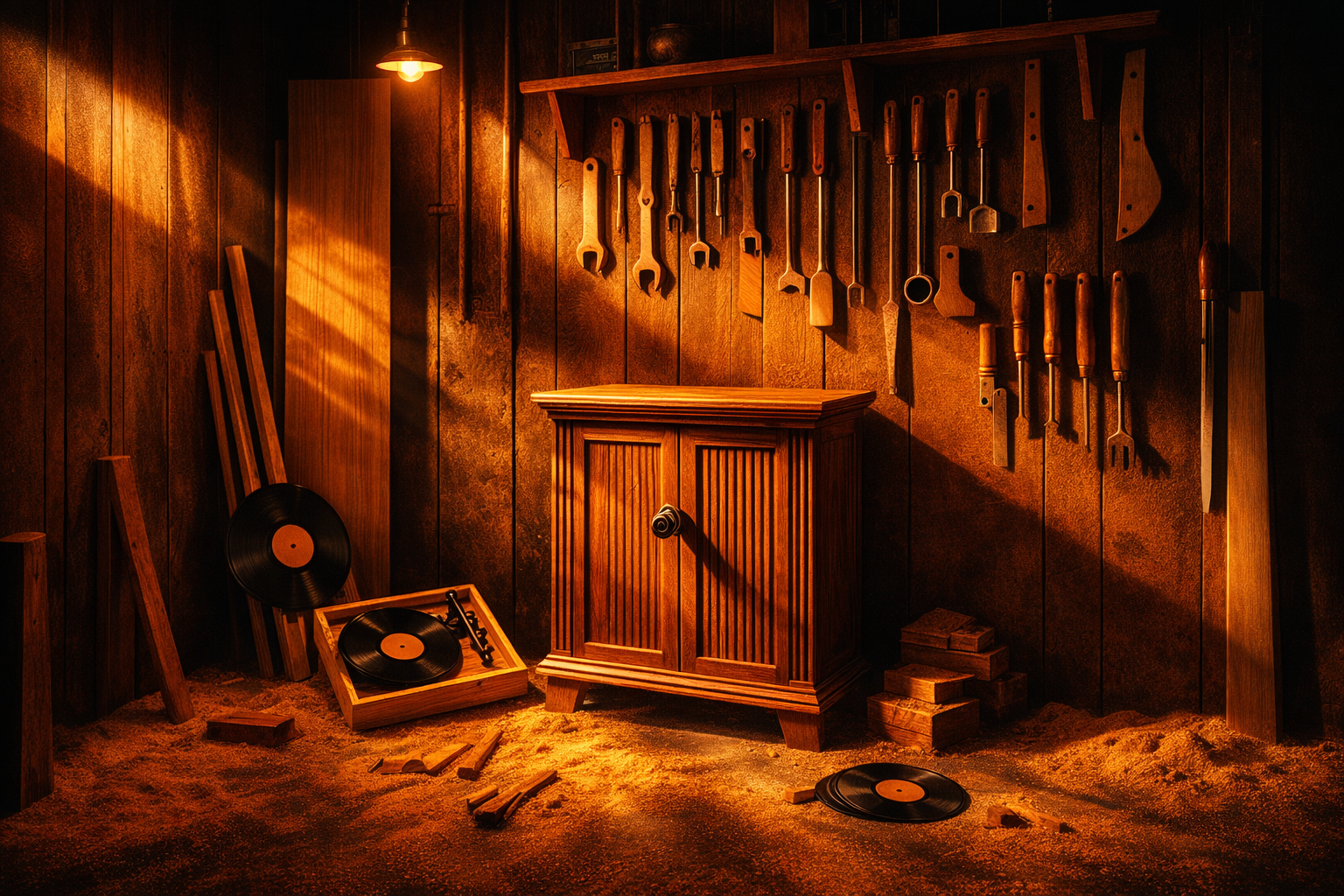
A note arrived from Shaun in Evergreen, Colorado. “At long last your record cabinet is complete.” It is shipping via TForce LTL Freight, curbside delivery, on a pallet. There is a drill bit taped to the side of the box.
This is not how software ships.
Software ships at 11:43 PM with a commit message that says “fix.” It ships when you merge the PR, when you push the deploy button, when CI goes green. It ships continuously, invisibly, in milliseconds. There is no pallet. There is no freight driver to inspect for damage. There is no moment where you might need to reject the shipment.
The record cabinet took months. It was built by hand in Colorado, packed in a custom crate, fully insured. Shaun’s damage rate is less than 1%. He is proud of this. He mentions it in the email.
The Deliberate Purchase
Nobody buys a handmade record cabinet by accident. It is an argument — made in walnut or maple, in joinery and finish — that some things are worth waiting for. That some objects should have weight and specificity. That you should need a drill to unpack them.
Vinyl has made a strange comeback in an era when every song ever recorded fits in your pocket. The obvious explanation is nostalgia, and the obvious explanation is always wrong. What vinyl offers isn’t the past — it’s friction. You have to choose what to play. You have to flip the record. You have to clean it. The music doesn’t autoplay, it doesn’t shuffle, it doesn’t fade into a podcast when you stop paying attention.
The record cabinet is friction made furniture. It organizes the commitment you’ve already made to a format that requires presence.
What the Freight Inspection Protocol Teaches
Shaun’s delivery instructions run to several careful paragraphs. The sequence matters: inspect the packaging, request the driver document any damage before you accept the shipment, call Shaun directly while the driver is still there. Keep the packaging until the damage claim is filed.
This is a complete protocol for a single delivery event. It anticipates failure modes. It assigns responsibility clearly. It includes a contact for the moment things go wrong.
Compare this to the terms of service you clicked through this morning.
There is something clarifying about an object that arrives on a freight truck. The handoff is explicit. You are present for it. If something is wrong, you know immediately, and there is a human being — a driver, a founder in Colorado — who can be held accountable. The chain of custody is short and visible.
Software accountability doesn’t work like this. When something breaks, it takes a postmortem to reconstruct what happened. There is no driver standing in your driveway while you inspect the packaging.
The Tracking Number Returns Nothing
The TForce tracking number doesn’t return results. The freight company’s website accepts the query and produces nothing.
This is almost too perfect. The most physical, tangible purchase experience — freight, pallet, drill bit, curbside delivery — and the digital layer on top of it is broken. The tracking system, which is supposed to give you the software version of the shipment (live, queryable, omniscient), fails. You are left waiting, which is what you signed up for when you ordered the cabinet.
Shaun says they will generally call to schedule a delivery window. Generally. Not a 30-minute UPS window, not a GPS ping. A phone call, probably from a freight dispatcher who has done this a thousand times, to work out a time that works.
You will be home. You will have your drill. You will inspect the packaging.
Why This Matters Beyond the Vinyl
The record cabinet is a specific thing, but it points at a broader pattern: the deliberate choice of objects and experiences that require presence, patience, and physical engagement. This is not Luddism. It is curation.
The people most immersed in building digital infrastructure are often the ones most intentional about analog counterweights. The software engineer who insists on a paper notebook. The product designer with a darkroom. The data architect waiting for a freight truck.
This isn’t contradiction — it’s balance. When you spend your days building systems designed to eliminate friction, you develop an appreciation for the friction that remains by choice. Vinyl sounds different partly because of how it sounds and partly because of what it takes to listen to it.
The cabinet will arrive. Shaun’s damage rate is less than 1%. The drill bit is taped to the side of the box because Shaun has done this enough times to know you will need it and may not have one ready.
That is craftsmanship. Not the object — the anticipation of what you’ll need when the object arrives.